
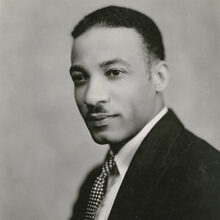
As we move through Black History Month, we’re invited not only to remember history, but to listen for it—especially in the music that helped carry a people through it.
This Sunday, February 15, our Adult Choir and Chamber Choirs will offer two spirituals arranged by composer and educator William Levi Dawson (1899–1990) in both the 10:00 and 11:30 A.M. services:
Spirituals are a genre of sacred folk music associated with Africans enslaved in America. They include “sing songs,” work songs, and plantation songs that helped shape later traditions like blues and gospel.
While many spirituals draw from biblical stories, they also speak plainly about lived reality—suffering, separation, endurance, longing, and the stubborn insistence that life can be more than what oppression allows.
Originally, spirituals were an oral tradition, passed from one generation to the next—memorized, adapted, and shared in community. After emancipation, many lyrics were published in print, and ensembles such as the Fisk Jubilee Singers(founded in 1871) helped popularize spirituals for wider audiences.
Over time, Black composers and arrangers—among them William Dawson—created what has been called a “new repertoire for the concert stage,” bringing Western classical training into conversation with a tradition born in bondage and held in community.
In The Spirituals and the Blues, theologian James Cone describes spirituals as “songs about black souls”—music through which enslaved people created a new style of worship and a new way of surviving.
Cone writes that through song, people “shouted and prayed; preached and sang,” because they had encountered a new reality—a God not confined to the theology and institutions of white churches. He also notes something profound: while the biblical story tells of a people unable to sing in a strange land, for Black people in slavery, being depended upon a song.
Spirituals, Cone says, provided “both the substance and the rhythm to cope with human servitude,” helping people retain a measure of African identity while building “new structures for existence in an alien land.”
That’s part of what makes spirituals especially meaningful to sing and hear during Black History Month: they are living history—truth-telling and hope-holding at the same time.
They carry grief and grit, but also humor, courage, imagination, and the sound of a people refusing to be reduced.
William Levi Dawson played an integral role in bringing spirituals into choral contexts that historically excluded Black musical traditions.
In 1912, Dawson ran away from home to study music full-time at the historically Black Tuskegee Institute, where he worked to pay tuition and participated in the choir, band, and orchestra—traveling with the Tuskegee Singers before graduating in 1921. He continued advanced study in music theory and composition, and in 1931 he organized and led Tuskegee’s School of Music, developing the Tuskegee Institute Choir into an internationally renowned ensemble.
Dawson’s choral catalog includes brilliant reimaginings of more than two dozen spirituals—music widely performed for its rhythmic vitality, rich textures, and deep understanding of what voices can do together. His arrangements don’t treat spirituals as museum pieces; they sound like living breath and living community—layered, responsive, and alive with motion.
As you listen this weekend, you might notice how these two pieces hold different energies.
Soon-ah Will be Done leans toward release and longing—a prayer for deliverance from “the troubles of the world.” Ain’-a That Good News carries a bright, forward-driving joy—like hope breaking through with confidence and movement.
Together, they offer a wide emotional range, held by a tradition that has always known how to make room for both sorrow and celebration.
May this music meet you where you are—and carry us, together, into something deeper.